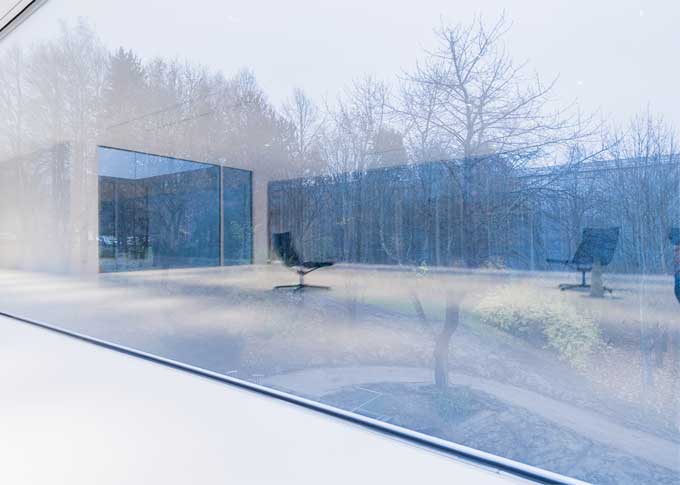

For decades, bullet-resistant glass was a design compromise. It meant thick, heavy, and often greenish panes that required polycarbonate layers - materials that increased fire loads, yellowed over time, and disrupted the visual purity of a building.
In modern architecture, security is a necessity, but it shouldn't be a visual limitation. Whether designing an embassy, a high-end flagship store, or a private residence, the goal remains the same: protection that is felt, not seen.
the aesthetic challenge of security
Traditional security glazing often looks like a fortification. The use of polycarbonate systems not only alters the optical quality of the glass but also creates challenges in fire protection. At sedak, we believe that glass should solve these technical hurdles without asking the architect to sacrifice their design intent.
the sedak approach: glass only
Our approach to bullet-proof glass redefines what is possible in the BR (bullet resistant) and STANAG (NATO) classes. We have eliminated the polycarbonate by focusing on:
- pure glass aesthetics: Unlike conventional systems that rely on polycarbonate layers, sedak bullet-resistant glass features a glass only build-up. This preserves the brilliant appearance of the glass and ensures it ages exactly like the rest of the façade.
- reduced fire load: By removing the polycarbonate layers, we significantly reduce the fire load of the glazing unit - a critical factor for high-occupancy public buildings.
- extreme protection classes: We provide certified safety from BR2 NS up to the highest class, BR7 NS, as well as STANAG levels that withstand armor-piercing ammunition.
- unprecedented scale: Security no longer has to be small-scale. We produce bullet-resistant glass in formats up to 3.6m x 20m, allowing for monumental, transparent walls that are as safe as they are beautiful.
security as an integrated design element
Security glass is no longer a secondary add-on material. It is a high-performance building component that must meet the same energy-efficiency and thermal-coating requirements as any other insulating glass.
By merging maximum resistance with the transparency of, we allow architects to design for safety while unveiling the true beauty of the structure.
When specifying high-security glazing, how do you balance the technical protection requirements with the long-term aesthetic and fire-safety goals?