
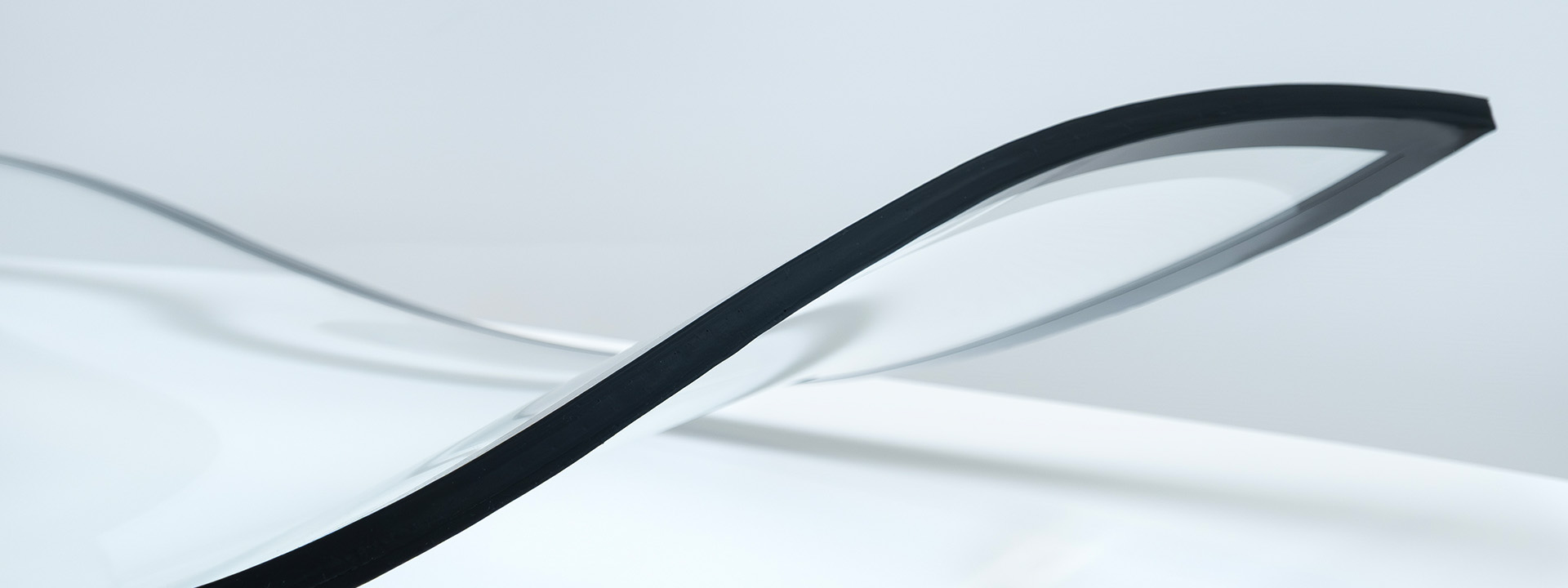
sedak multicurved — 3D-bent synclastic glass panel for curved architectural façade, no molds required

sedak multicurved:

game changer in architectural glass

sedak’s newly developed bending process enables multiaxial, free-form geometries entirely without the need for molds. This cost-efficient bending method allows radii below 500 mm and formats up to 8.5 × 3.6 × 1.2 m, with precise repeatability, consistently excellent optical quality, and high structural strength.

Why sedak multicurved Changes the Rules of Curved Façade Glass

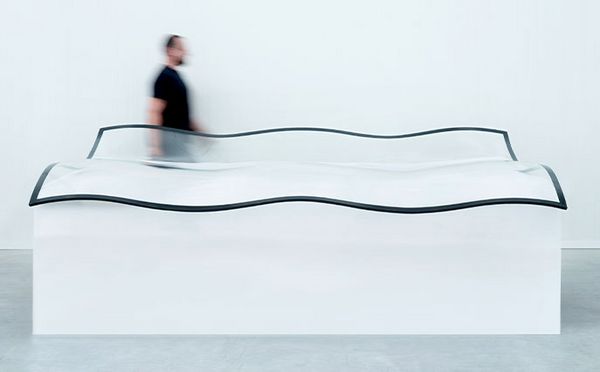
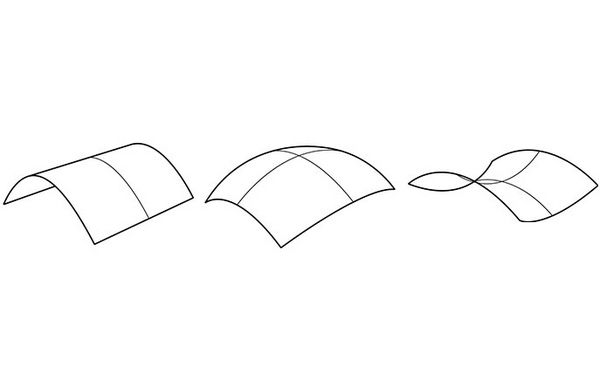
  • 3D geometries in FTG / HSG: Multiaxially bent fully-toughened and heat-strengthened glass — including spherical, synclastic, anticlastic, free-form, and parametric geometries — produced entirely without molds.
  • Large formats, minimal radii: Highest precision with radii below 500 mm and formats up to 8.5 × 3.6 × 1.2 m. Suitable for single panels spanning entire façade bays.
  • Maximum design freedom: The process enables new possibilities for organically curved shapes and parametric designs —compatible with BIM workflows and parametric design tools such as Rhino/Grasshopper.
  • Efficient sustainable production: Optimized process times, economical workflows, no mold fabrication costs, and resource-efficient manufacturing support high-volume, industrial produc-tion with reduced environmental impact.

A precisely controlled, furnace-based process ensures high repeat accuracy. Each glass pane is bent with exact dimensional consistency and can be further processed without limitations — into VSG (laminated safety glass), insulating glass units (IGU), or complex façade assemblies.

Coatings and ceramic prints can be fully integrated, as bending can occur both concave and convex. This allows synclastic, anticlastic, and free-form geometries to be manufactured reliably and reproducibly. All standard coatings (solar control, Low-E, printed frits) are compatible.
For Building Owners & Developers

 sedak multicurved eliminates the traditional trade-off between iconic architecture and cost control. No custom molds means faster lead times, lower non-recurring tooling costs, and shorter project schedules — even for complex geometries.

Full-Scope Approach: From Design Concept to Fabrication-Ready 3D Glass

Early feasibility — before detailed planning — is critical on curved-glass projects. sedak combines production technology with a comprehensive feasibility analysis. Proprietary software evaluates geometry, radii, and stress zones, identifying optimization potential early in the design process.

  • Validation of the 3D geometry (compatible with STEP, IGES, Rhino, and IFC input)
  • Evaluation of panel sizes, bending radii, and geometries
  • Optimization recommendations based on real process data
  • Derivation of cost-effective implementation recommendations including panel rationalization

Applications: Where Architects Use sedak multicurved

  • Curved and free-form façade cladding
  • Structural glass envelopes and canopies
  • Iconic landmarks and cultural buildings
  • Complex interior glass structures, atriums, and skylights

Technical consulting is available from the schematic design phase — contact sedak early to validate geometry and optimize your project timeline.
Request Feasibility Analysis


FAQ – Frequently asked questions from architects and building owners

What is the minimum bending radius for sedak multicurved glass?

sedak multicurved achieves bending radii below 500 mm — significantly smaller than conventional mold-based processes. Exact minimum radii depend on glass thickness and geometry and are validated through sedak's proprietary feasibility software on a project-by-project basis.

Can sedak multicurved glass be used as laminated safety glass (VSG) or insulating glass (IGU)?

Yes. 3D-bent panes from sedak multicurved can be further processed into VSG (laminated safety glass), insulating glass units (IGU), and complex façade assemblies without restrictions. Standard coatings, solar-control films, and ceramic frit prints are fully compatible.

Is mold fabrication required — and what does this mean for project costs and lead times?

No molds are required. sedak's furnace-controlled process eliminates all mold fabrication costs — typically a significant non-recurring expense in curved glass projects. This results in shorter lead times and lower total project costs, particularly for complex or custom geometries.

What file formats does sedak accept for feasibility analysis of 3D glass geometries?

sedak's feasibility analysis accepts 3D geometry input in common formats including STEP, IGES, Rhino 3DM, and IFC. The analysis validates panel geometry, bending radii, stress zones, and provides cost-optimization recommendations — available from schematic design phase onward.

Which glass types (FTG / HSG / TVG / ESG) are available in sedak multicurved?

sedak multicurved is available in both fully-toughened glass (FTG / ESG) and heat-strengthened glass (HSG / TVG). Both are produced with the same mold-free bending process, offering structural performance levels suited to façade and structural glazing applications.

What is the maximum format for 3D-bent architectural glass from sedak?

sedak multicurved produces 3D-bent glass in formats up to 8.5 × 3.6 × 1.2 m. Combined with sedak's general large-format capability of up to 3.6 × 20 m for flat glass, this positions sedak for the largest architectural façade panels currently achievable in curved tempered glass.

When in the design process should architects contact sedak for a curved glass project?

As early as possible — ideally at schematic or concept design stage. Early engagement allows sedak's software-based feasibility analysis to inform the geometry before construction documents are finalized, reducing change orders and ensuring the most cost-effective panel rationalization.

Can sedak multicurved produce synclastic and anticlastic double-curved glass panels?

Yes. The process supports synclastic (dome-like, positively curved in two directions), anticlastic (saddle-shaped, with opposing curvatures), and free-form geometries — all produced reliably and repeatably without molds. This is particularly relevant for parametric and biomimetic façade designs.

technical specifications

  • tempered 3D geometries
  • automated bending process
  • quick processing times
  • no molds
  • repeatability

Technical consulting

Contact sedak early in the schematic design phase — to validate geometry and optimize your project timeline.

Request Feasibility Analysis